

Most people don’t realise this, but you have a pair of hidden “wings” on your back.
They’re not something you ever see in the mirror. They sit underneath the shoulders, slide quietly over the ribs, and help decide how far your arms can reach, how strong your blocks feel, and how much snap your strikes have.
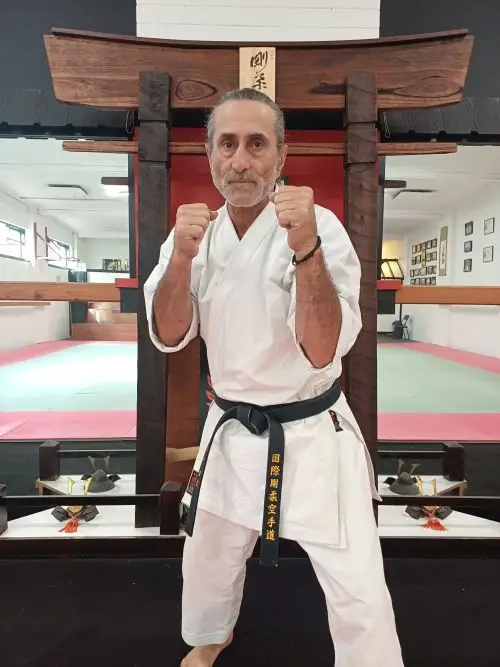
Calm, balanced, and able to move instantly.
Those “wings” are the shoulder blades.
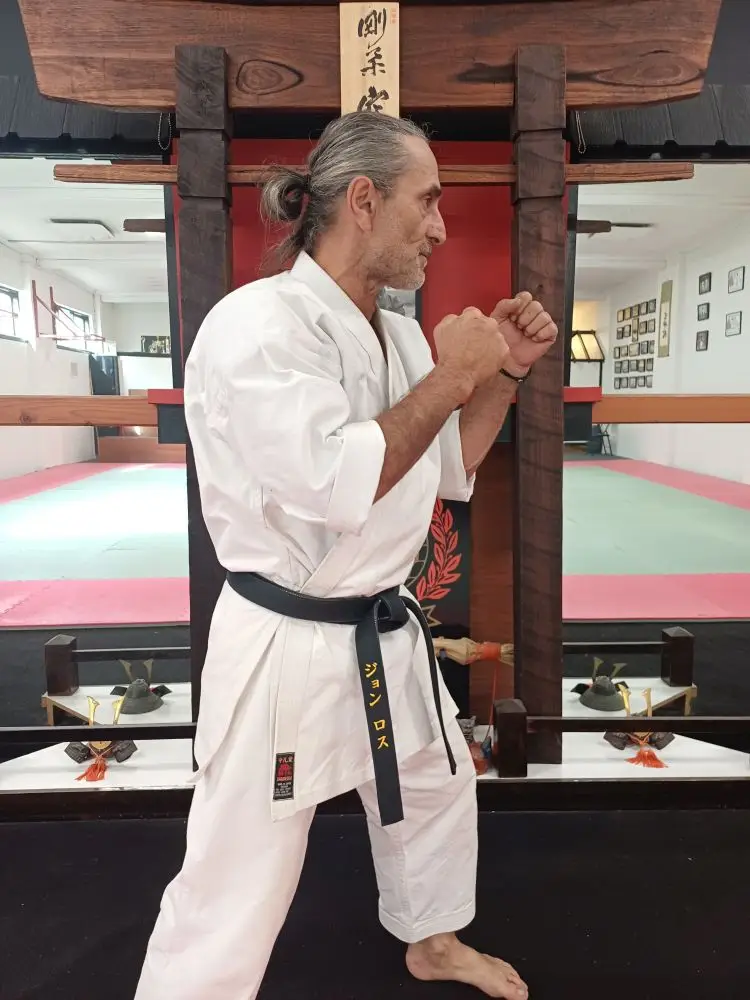
In daily life — desks, screens, study, phones — those wings slowly get stuck forward.
They don’t move freely anymore.
They stop gliding.
They stop opening the chest when the arms move.
When that carries into karate, a few things happen without anyone noticing:
- reach shortens
- blocks feel late or cramped
- shoulders tire quickly
- power feels like it stops halfway
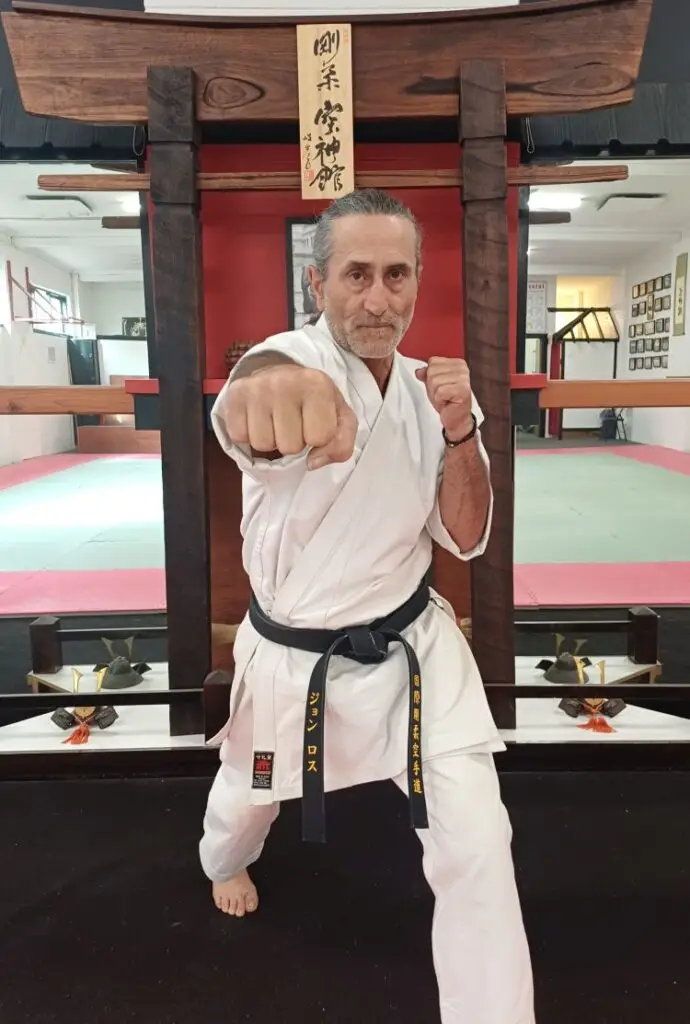
It’s not bad posture.
It’s not weakness.
It’s simply that the wings can’t open properly.
In kamae, this often shows up as:
- head angled down
- chest slightly collapsed
- shoulders rounded forward
The stance still looks ready — but the body isn’t as free as it could be.
We’ve prepared a short shoulder and upper-back sequence for you to use.
This isn’t about stretching or trying to “stand up straight”.
It’s about freeing the wings so:
- blocks travel sooner and wider
- strikes extend cleanly
- the shoulders don’t jam
- power can travel all the way through the arms
Think of it like oiling a hinge you didn’t know was stiff.
You won’t suddenly look different —
but you’ll feel more space, more reach, and more control.
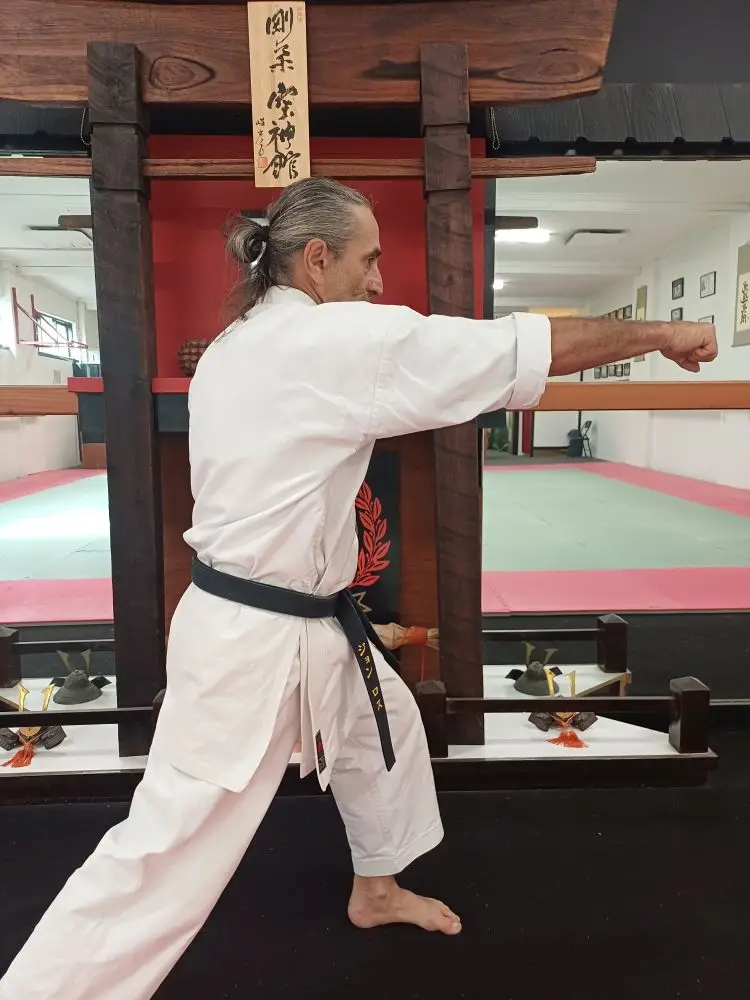
“When the shoulder blades can move freely, the arms stop fighting themselves — and technique has room to work.” – John Ross Kyoshi
This work is simply about keeping the body ready to move — the way karate expects it to.
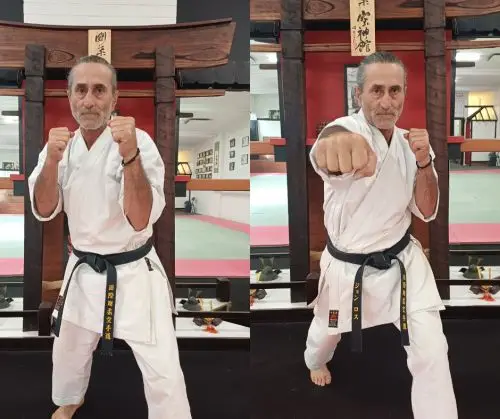
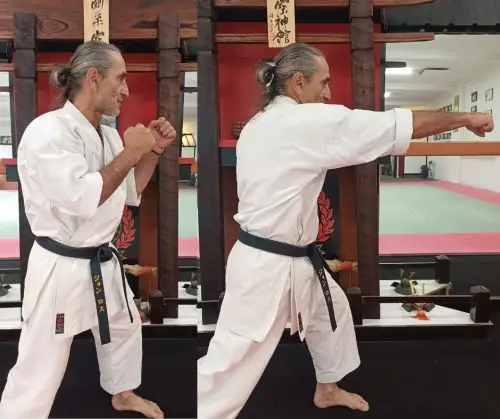
Same stance. Very different potential.
A collapsed chest shortens reach and delays power before movement even begins.
We’ve prepared a short shoulder and upper-back sequence as a simple tool to support the ideas in this article.
It’s not something that needs to be “worked through” in class, and it’s not homework. It’s simply a reference for those who are curious about improving their reach, ease of movement, and readiness in kamae. Download it here.