

One of the simplest lessons taught at IGK Victoria is also one of the most important: stay grounded.
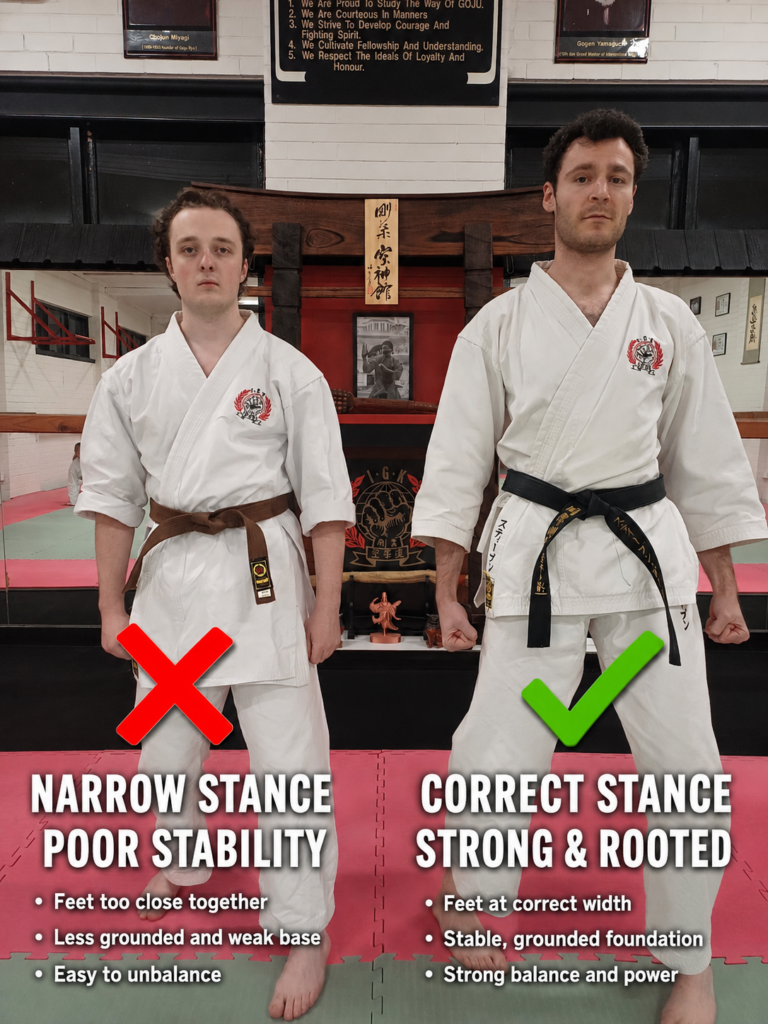
Whether you are practising kihon, performing kata, sparring in kumite or learning practical self-defence, your effectiveness depends largely on where your body weight is carried. A high, unstable posture may feel quick, but it is surprisingly easy to push, pull or throw off balance. A low, well-centred posture is another matter entirely.
As John Ross Kyoshi often reminds students:
“Strong techniques begin with a strong foundation. If your stance is unstable, everything built upon it becomes unstable.”
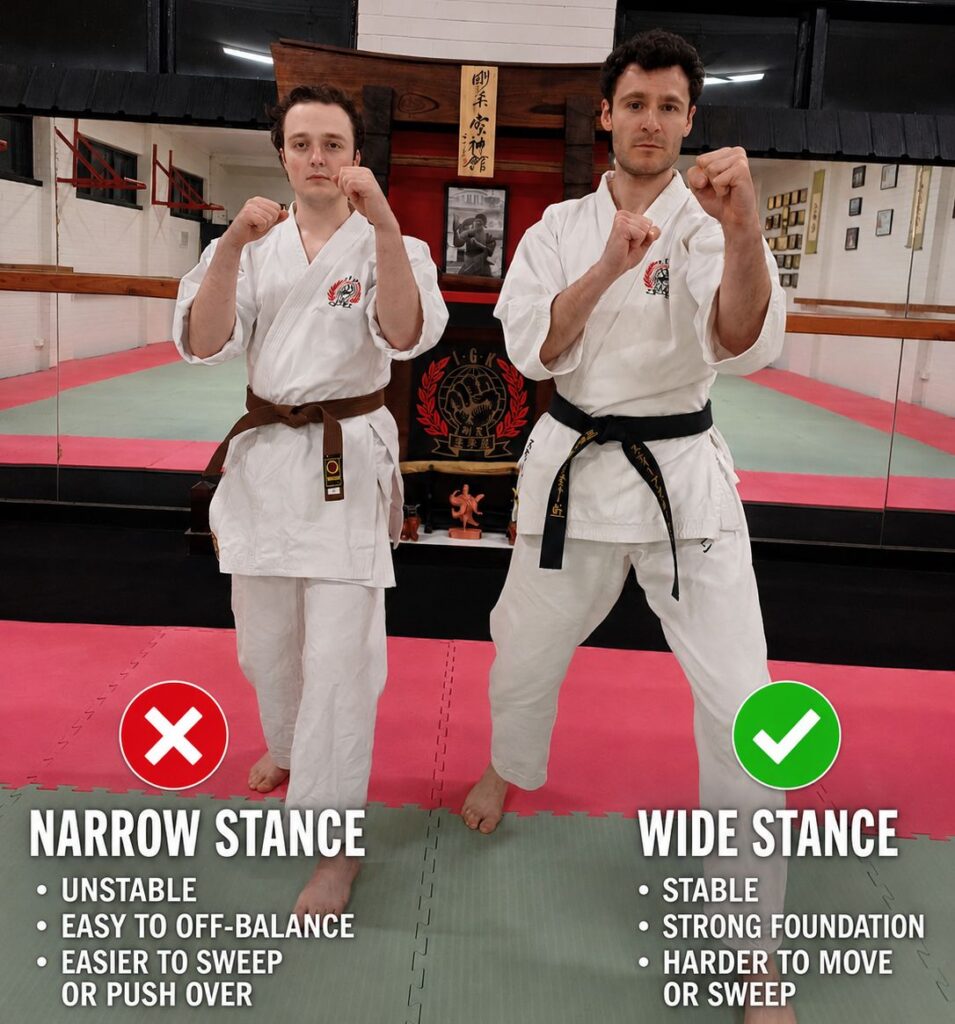
The Centre of Power
In Japanese martial arts, we refer to the hara (腹), or tanden (丹田), as the body’s centre. Although located in the lower abdomen, it represents much more than anatomy. It symbolises balance, stability, power and composure.
Keeping your hara low does not simply mean bending your knees. It means allowing your body weight to settle naturally into the ground through relaxed, connected legs.
Think of a mature tree. Its strength does not come from its branches, but from the roots beneath the surface. Karate should develop the same quality.
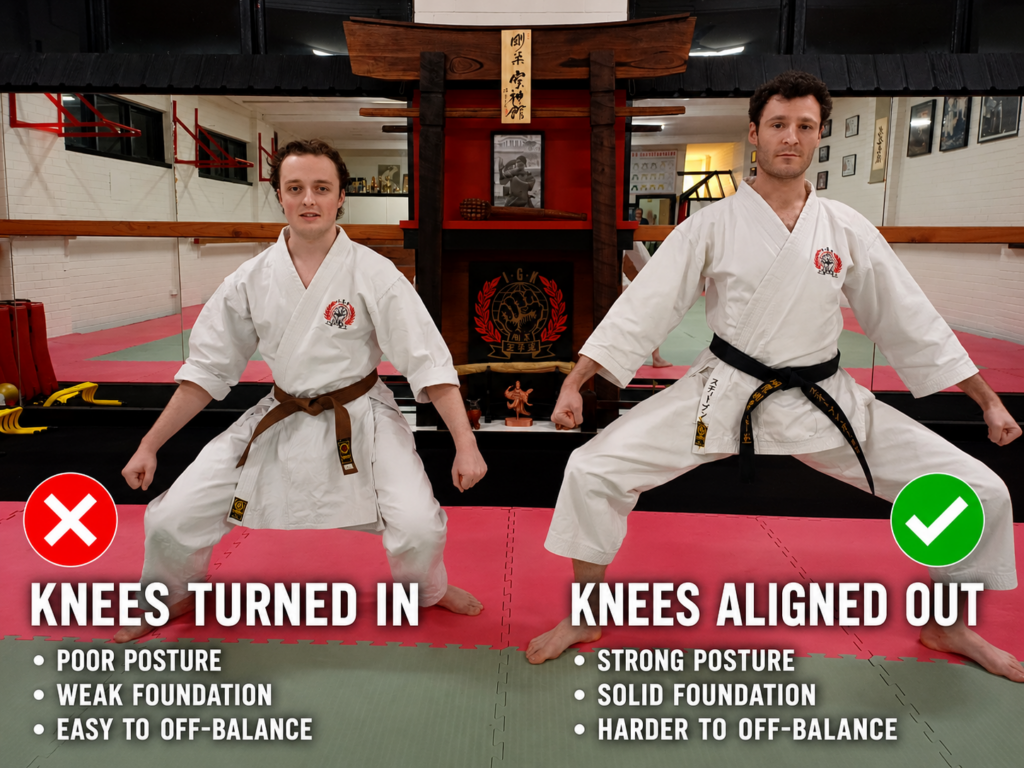
Why Lower is Stronger
A lower centre of gravity makes you significantly more difficult to move.
When an opponent pushes, pulls or attempts to sweep your legs, your weight is already directed into the floor. Rather than relying purely on muscular strength, your whole body works together.
You become stable without becoming rigid.
This principle applies equally to:
- Kihon, where stable stances allow techniques to generate greater power.
- Kata, where balance creates smooth transitions and decisive finishing positions.
- Kumite, where stability allows rapid movement without sacrificing control.
- Self-defence, where remaining on your feet is often your greatest advantage.
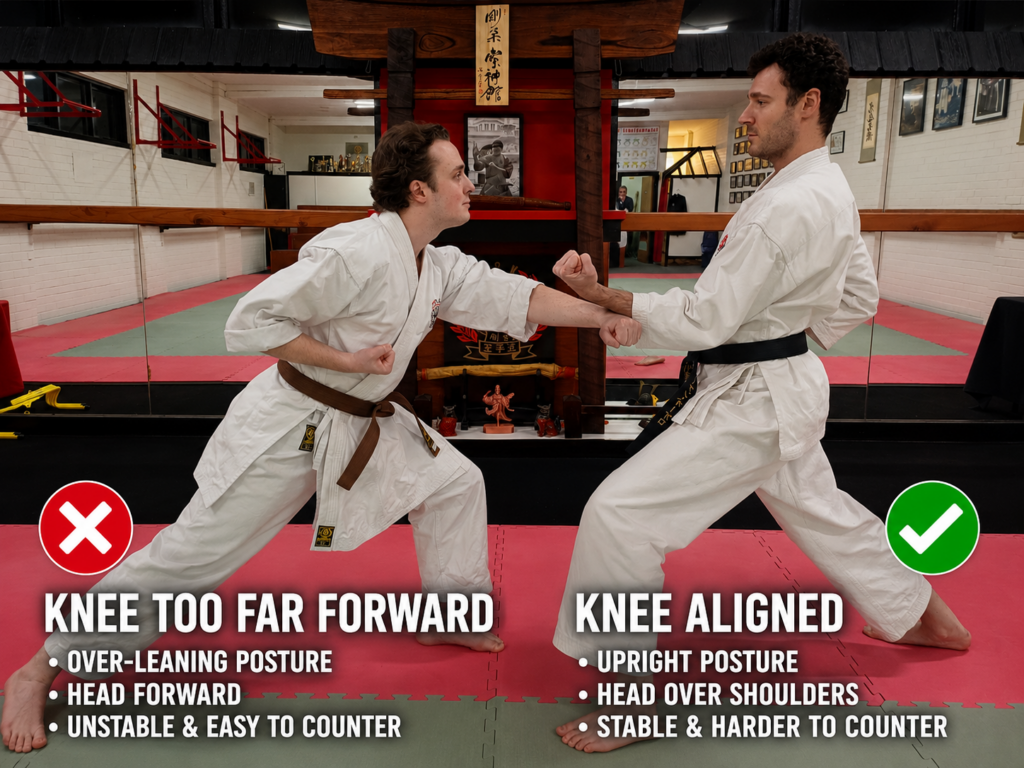
Rooting Yourself
Martial artists often describe this feeling as becoming rooted.
Rooting does not mean becoming fixed to one spot. Instead, it means maintaining such excellent balance that movement begins from a stable base.
Imagine standing barefoot on wet sand. As your feet settle naturally into the surface, you become much more difficult to push over. In karate we develop the same feeling by allowing our weight to sink naturally into the floor.
This rooted connection allows the hips to drive techniques while the upper body remains relaxed.
As Lambros Kallianiotis Renshi frequently reminds students:
“Don’t fight the floor—use it. Every punch, block and kick begins from the ground.”
Relaxed Does Not Mean Weak
Many beginners mistake strength for tension.
In reality, excessive tension raises the shoulders, straightens the knees and lifts the body’s centre of gravity. Ironically, trying harder often makes a person easier to unbalance.
The strongest karate practitioners appear relaxed because unnecessary muscle tension has disappeared. Their legs support them naturally while the hips remain heavy and stable.
Power comes from structure, not strain.
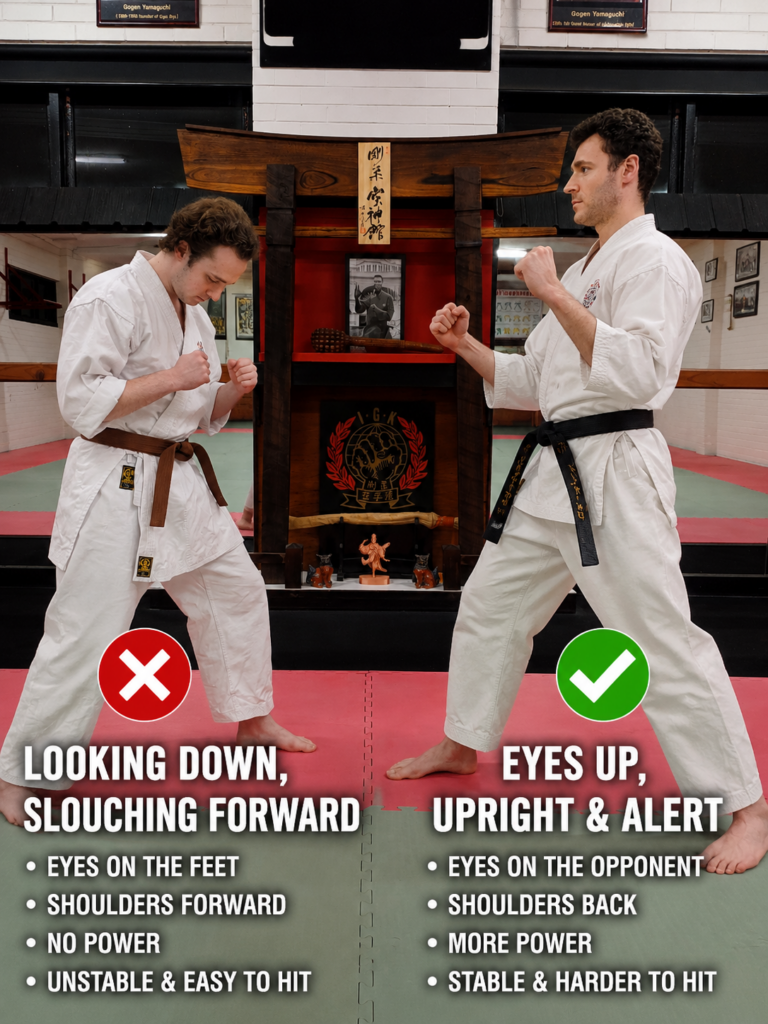
Test Yourself
Try a simple exercise with a training partner.
Stand with your knees locked and your body tall. Ask your partner to give you a gentle push.
Now soften your knees, settle your hips, relax your shoulders and imagine your weight flowing through your feet into the floor. Ask them to push again.
Most students immediately notice how much more solid they feel.
This is the beginning of understanding body mechanics rather than relying solely on strength.
Every Stance Has Purpose
No stance is intended to be low all the time. Different techniques require different heights, distances and movement.
The important principle is maintaining control of your centre.
As you transition between stances, avoid unnecessary rising and falling. Skilled karate appears smooth because the hips remain level while the body moves efficiently from one technique to the next.
This is one of the characteristics that students continually refine through training at IGK Victoria.
A Lifetime of Practice
Lowering the hara is not simply about passing your next grading. It is a principle that becomes deeper with every year of training.
As your understanding grows, your movements become quieter, more efficient and more powerful. You discover that true strength is not created by force alone, but by building every technique upon a stable foundation.
The next time you practise kihon, kata or kumite, pay attention to your centre.
Stay relaxed.
Stay rooted.
And let the ground become one of your greatest training partners.