

Why regular training matters more than bursts of effort
In karate, progress rarely comes from doing everything at once.
It comes from showing up — again and again.
Many students experience a familiar pattern: a burst of intense training that feels impressive, followed by fatigue, frustration, or time away from the dojo. While intensity can create short-term momentum, karate has never been built on short efforts.
As John Ross Kyoshi puts it:
“Training hard for a month feels impressive, but karate is built on years of steady practice.
Two focused sessions a week for six months will take you further than burning out after four weeks.”
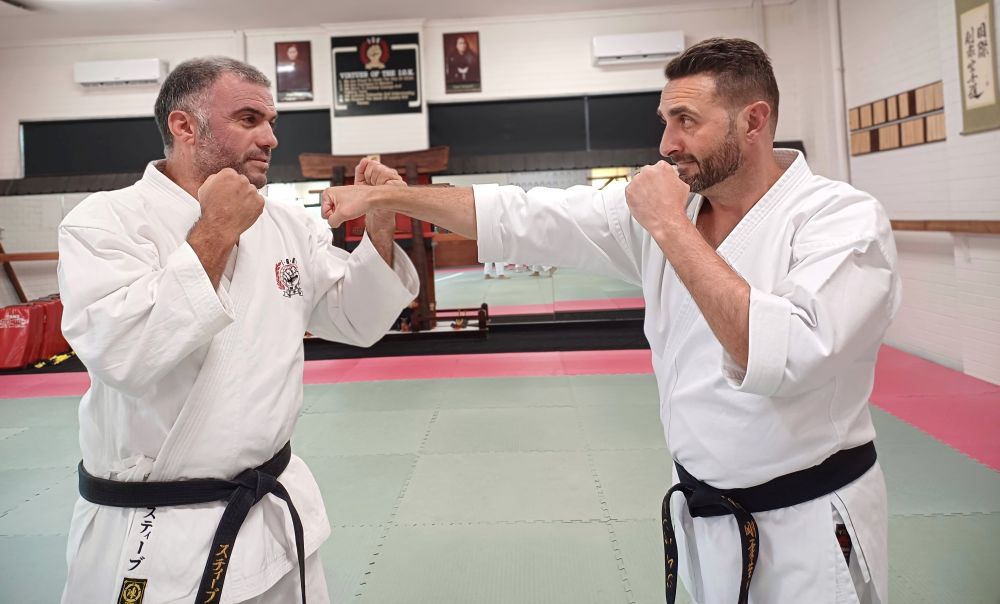
Karate is a marathon, not a test of willpower.
If you can learn to show up consistently — even imperfectly — you’ll often outperform the version of yourself that trains hard, then disappears.
“Karate doesn’t reward intensity,” John Ross Kyoshi notes.
“It rewards persistence.”
Why Consistency Changes Everything in the Dojo
From an instructor’s perspective, the difference between consistent and inconsistent training is unmistakable.
Lambros Kallianiotis Renshi sees it every week on the floor:
“When students train consistently, their fitness keeps improving, their muscle memory develops, and they can build from the last class.
When they go missing, it’s like starting again — every time.”
Fitness is part of it, but it’s not the whole story.

Consistent training allows techniques to carry forward. Pad work, kata, and bunkai all progress because the body remembers what was corrected last time. When training is irregular, that thread is broken — and the same corrections have to be made again and again.
“The students who train once a week tend to forget,” Lambros Renshi explains.
“The ones who train twice a week or more retain it. They can pick up where they left off and advance.”
This isn’t about talent. It’s about repetition and retention.
There’s also a hidden cost to inconsistency: unlearning.
“When you practise something incorrectly, you become good at doing the wrong thing,” Lambros Renshi says. “And it takes just as long to unlearn it.”
Dropped hands, poor posture, rushed movement — once they settle in, they don’t disappear quickly. Consistent training prevents bad habits from taking root in the first place.
The Motivation Loop
Consistency also affects motivation in a way many students don’t expect.
When training is regular, performance improves. When performance improves, confidence rises. That confidence feeds motivation.
“When you drop off, errors creep in, and that can be demotivating,” Lambros Renshi notes. “But when you’re performing better, you feel good — and that makes you want to progress further.”
In other words, motivation often follows consistency — not the other way around.
Consistency, Karate, and the Return to School
As students return to school, this message becomes even more relevant.
School, like karate, rewards steady effort far more than short bursts of intensity. Focus, learning, and confidence are built through routine, repetition, and follow-through.
Regular karate training helps students practise:
- showing up on schedule
- sustaining attention even when tired
- accepting correction without frustration
- managing fatigue and focus under pressure
These habits support learning in the classroom as much as progress on the dojo floor.
Karate doesn’t compete with school — it reinforces it.
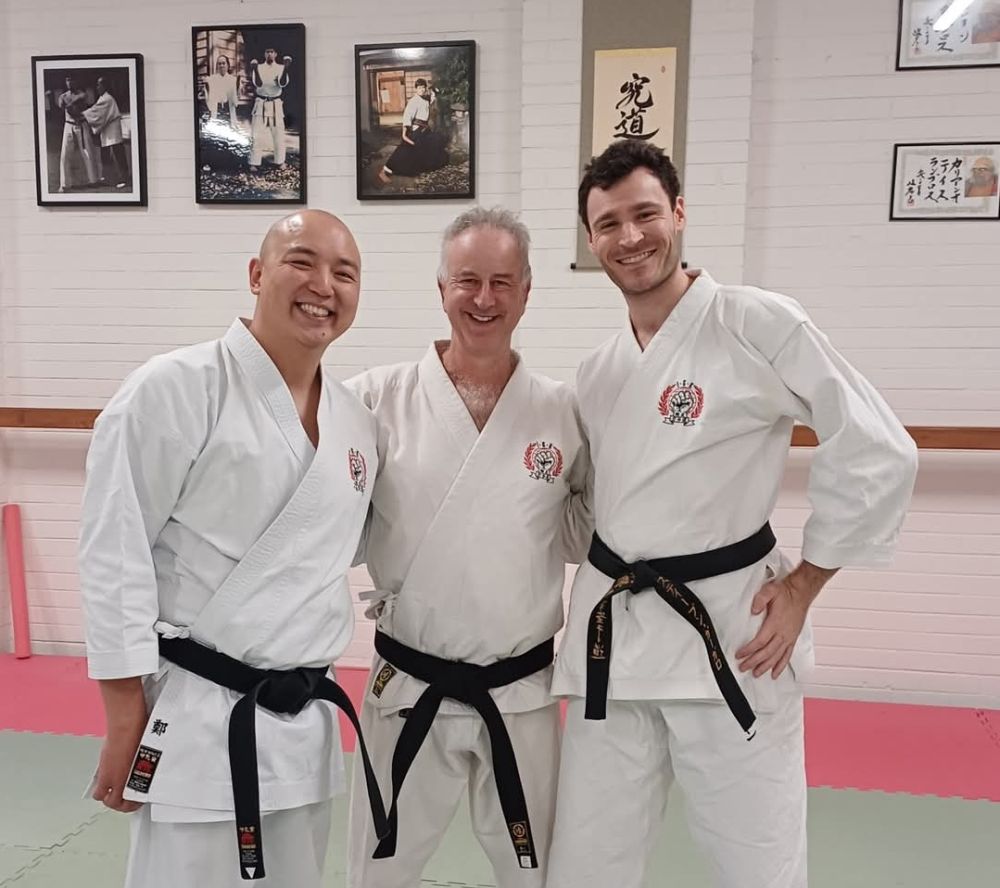
The Long View
Karate is a long journey. So is education. So is personal growth.
Intensity can feel impressive in the short term.
Consistency is what quietly changes people.
As we return to regular training and a new school term, the goal isn’t to train harder for a few weeks — it’s to keep showing up, steadily, and let the work compound.