

Along the side rail in the dojo we often practise our standing hip abductor drills — the familiar “chicken wings” exercise. The leg lifts to the side with control, posture stays upright, and the standing leg works just as hard as the moving one.
Most people assume this is purely to improve roundhouse and side kicks.
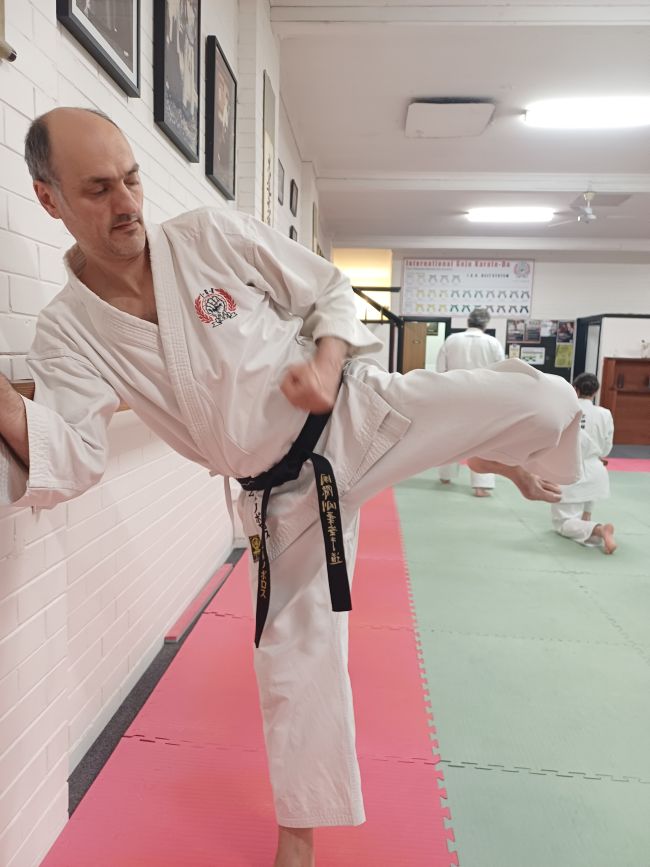
But is it only about kicking?
Over time we see the same pattern. Many students struggle to sit comfortably into lower stances. The immediate conclusion is usually, “I need to stretch more.” Flexibility is important — but strength and control around the hips are just as critical.
The hip abductors — the muscles on the outside of the hip — stabilise the pelvis whenever you stand on one leg. Every step, pivot, and turn depends on them. If they are weak, the body compensates. The knee collapses inward. The stance narrows. Balance becomes unreliable.
Consider some common training moments:
During kata, when you turn sharply and need a small adjustment step to regain balance — is that concentration, or hip stability?
In Kata Saifa, when you rise into Sagi Ashi Dachi (Heron stance), can you hold steady without drifting or overbalancing?
When you chamber a kick in kumite, does the standing leg feel strong and rooted — or shaky?
These are practical indicators.
Long hours of sitting can play a part. Sitting — especially leaning forward over a laptop — places the hips in a flexed position and reduces activation of the stabilising muscles. Over time, those muscles can weaken. The result is not only tight hips, but less control when you ask them to work dynamically in training.
If we sit all day and only stretch occasionally, we may improve range of motion but not strength. Karate requires both.
Lower stances demand strength to support the pelvis and knees. Turning in kata requires lateral control. One-leg positions require stability. Kicks require a dependable base.
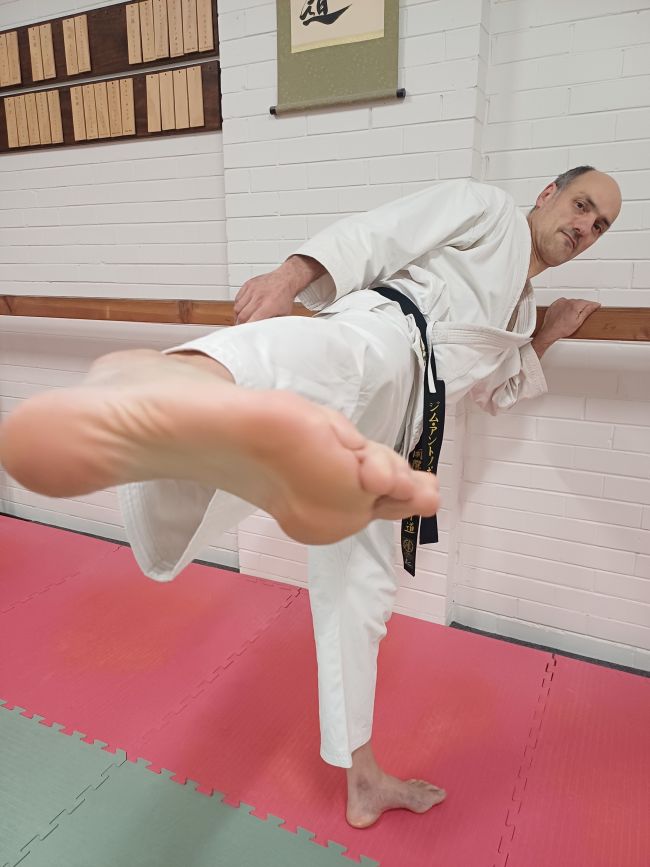
Practical Hip Abductor Exercises to Do at Home
These are simple, effective, and require no equipment.
1. Standing Rail or Wall Hip Raises
Stand tall holding a rail, bench, or wall for balance.
Lift one leg slowly out to the side without leaning your torso.
Lower with control.
Keep hips level.
2–3 sets of 10–15 each side.
Focus on posture, not height.
2. Single-Leg Balance Holds
Stand on one leg for 20–40 seconds.
Keep your chest upright and hips level.
Progress by turning your head slowly left and right, or by lightly moving the free leg.
This directly supports stability in Sagi Ashi Dachi.
3. Side-Lying Leg Raises
Lie on your side, bottom leg bent slightly.
Lift the top leg straight up, without rolling backward.
Lower slowly.
2–3 sets of 12–15 each side.
Control is more important than speed.
4. Controlled Lateral Step-Outs
Stand upright and step one leg sideways into a mini squat, then return.
Keep knees aligned over toes.
This builds functional strength for wider stances.
Even 5–10 minutes, three times per week, can make a noticeable difference.
Combining Work, Study and Training
If you spend long hours sitting:
• Stand and move every 30–45 minutes.
• Perform 10 controlled hip raises during short breaks.
• Adjust your laptop so you are not constantly collapsing forward.
• Consider some standing study or work periods where possible.
Karate is influenced by daily habits. If the hips are inactive all day, they will not suddenly become stable under load in the dojo.
When you wobble in turns, struggle to hold one-leg stances, or find lower positions difficult, it may not be a flexibility issue alone. Often it is strength and control.
Stronger hips create cleaner turns.
Cleaner turns create stronger kata.
A stable base creates confident movement.
Train deliberately inside the dojo.
Support it consistently outside.
Your karate will reflect both.