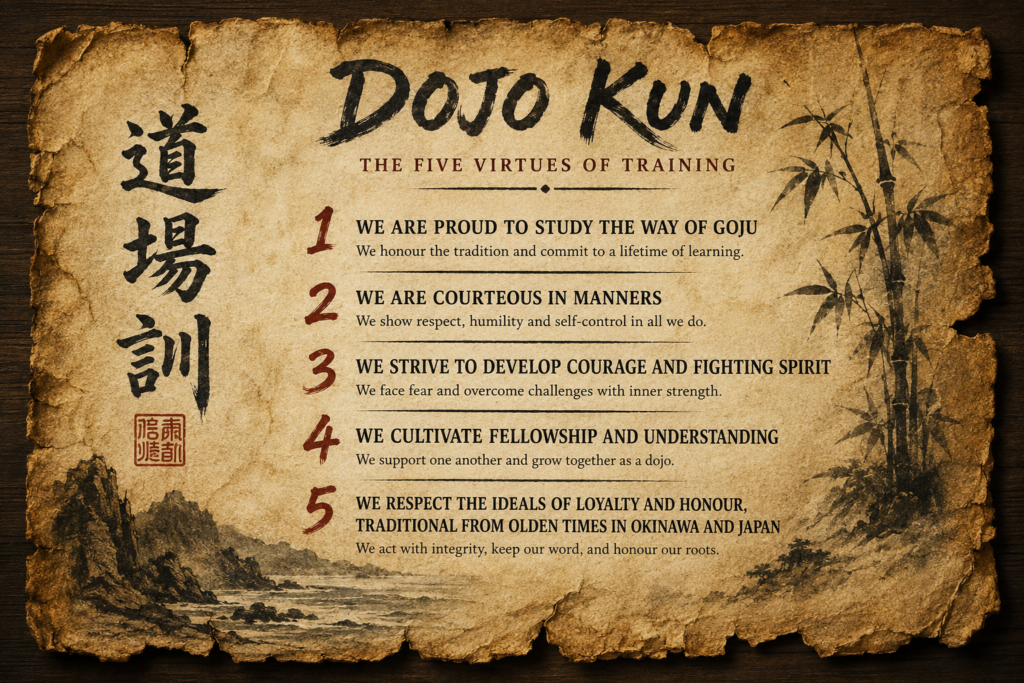

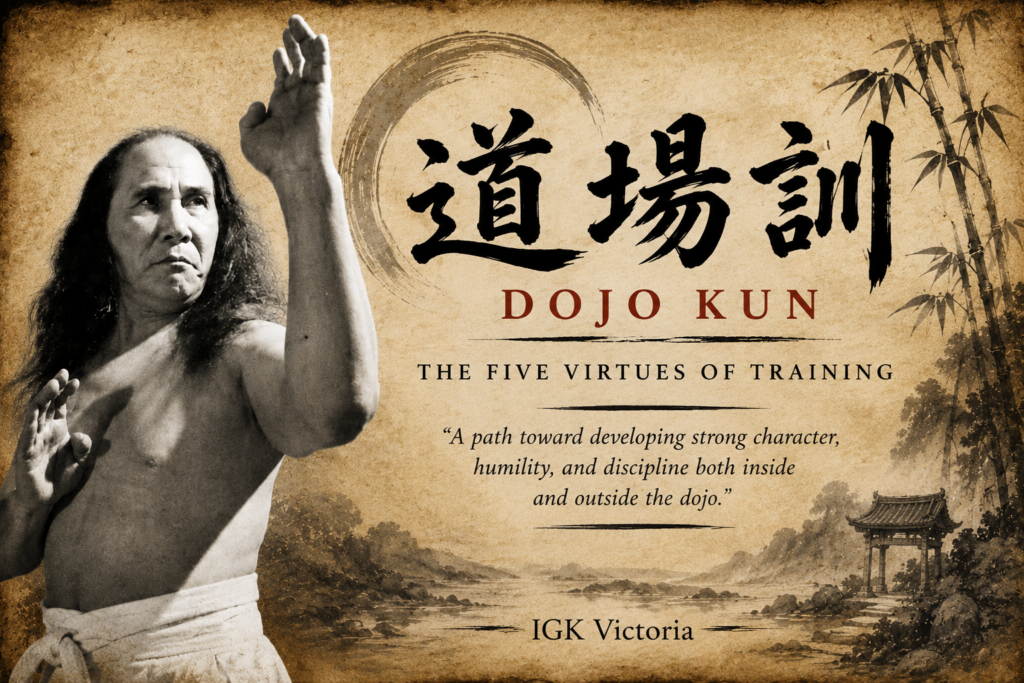
The IGK’s core values — the Five Virtues handed down by YAMAGUCHI Gogen Hanshi — are otherwise known as the Shuyo Kun, or more simply, the Dojo Kun. They are often recited at the end of class to remind students that karate is not merely physical training, but a path toward developing strong character, humility, and discipline both inside and outside the dojo.
We, the students of the IGK, aspire to these virtues:
- We are proud to study the way of Goju
- We are courteous in manners
- We strive to develop courage and fighting spirit
- We cultivate fellowship and understanding
- We respect the ideals of loyalty and honour, traditional from olden times in Okinawa and Japan
Let us look more deeply at each virtue and the meaning behind it.
1. We are proud to study the way of Goju
This virtue is about identity, commitment, and respect for the path we have chosen.
“The way of Goju” is more than learning techniques. It is a lifelong process of refining oneself through discipline, effort, and perseverance. Pride in Goju does not mean arrogance. Rather, it means valuing the tradition, the training, and the responsibility that come with being part of this lineage.
Goju teaches the balance of hard (go) and soft (ju) principles — not only in karate, but in life itself. This virtue reminds us to train consistently, to continue even when training becomes difficult, and to appreciate those who came before us.
2. We are courteous in manners
Courtesy (rei) is one of the foundations of traditional martial arts.
Respect for instructors, fellow students, training partners, and even opponents is essential. Bowing is not an empty ritual — it is a symbol of humility, gratitude, and awareness.
True courtesy also means learning to control emotions such as anger, impatience, and pride. A student who develops respectful manners within the dojo gradually carries those qualities into everyday life.
Karate should strengthen character, not ego.
3. We strive to develop courage and fighting spirit
This virtue refers to inner strength rather than aggression.
“Fighting spirit” means developing the ability to face fear, discomfort, uncertainty, and adversity. Courage is not the absence of fear — it is the willingness to act despite it.
IGK training is physically and mentally demanding for this reason. Through hard training, students learn resilience, composure, and perseverance under pressure.
In many ways, the greatest opponent is often oneself — laziness, hesitation, self-doubt, or fear. Karate teaches us to confront these weaknesses directly and continue moving forward.
4. We cultivate fellowship and understanding
Karate is not a solitary journey. Progress is built through training together and supporting one another.
Students rely on their training partners to improve, so mutual trust, respect, and understanding are essential. Fellowship means encouraging others rather than competing destructively.
In practice, this includes helping beginners, training safely and responsibly, and celebrating the progress and achievements of fellow students.
A strong dojo is built on unity and shared growth.
5. We respect the ideals of loyalty and honour, traditional from olden times in Okinawa and Japan
This final virtue connects IGK karate to its cultural roots in Okinawa and the ethical traditions of Japan.
It reflects values such as honour, loyalty, integrity, humility, and personal responsibility. Loyalty does not mean blind obedience. Rather, it means remaining committed to your teacher, your dojo, your training, and the principles you choose to live by.
Honour means acting with integrity even when nobody is watching — keeping your word, accepting responsibility for mistakes, and conducting yourself with sincerity and respect.
These ideals remain as important today as they were generations ago.
The Dojo Kun reminds us that karate training is not simply about developing physical ability. It is about developing character, discipline, resilience, and respect.
Technique may begin the journey — but character is what ultimately defines the martial artist.